|
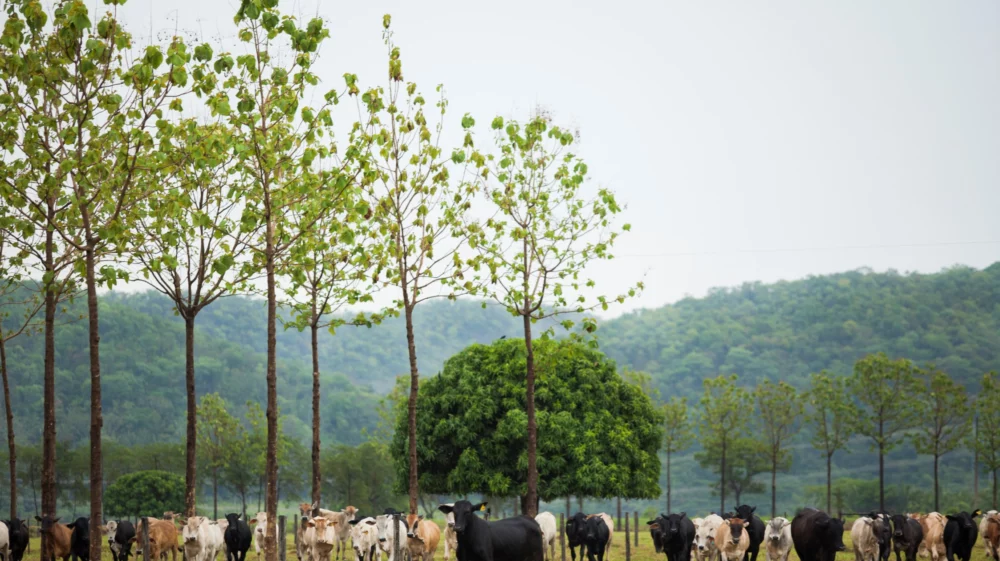
Testing a multi-scale scenario approach for smallholder tree plantations in Indonesia and VietnamTechnological Forecasting and Social Change 80(4), 762-771 Author(s): Dermawana, A. ; Kemp-Benedict, E. ; Huber-Lee, A. ; Fencl, A.Year: 2013 Research Area(s): Sustainable Futures Description: This article presents a participatory method for constructing cross-scale scenario logics, which applies when different locales are embedded within a common higher-level scenario. Smallholder tree plantations are seen as promising routes to alleviating poverty and increasing forest area among the countries in Southeast Asia. However, implementation has been disappointing, which led scientists at the Center for International Forestry Research (CIFOR) to consider a scenario exercise as a way to mitigate the risk of unwanted outcomes. The authors chose an explicitly multi-scale approach, and applied the method during two scenario workshops held to explore the use of smallholder tree plantations in efforts to improve rural livelihoods; each workshop considered two different localities. From these experiences, they discuss and critique the method.More information External Link |
|
|
Factors Affecting Phosphorus in Groundwater in an Alluvial Valley Aquifer: Implications for Best Management PracticesWater 5(2), 540-559 Author(s): Flores, F. ; Easton, Z.M.; Geohring, L.D.; Vermeulen, P.J.; Haden, V.R.; Steenhuis, T.S.Year: 2013 Research Area(s): Water Resources Description: Many streams in the US are impaired because of high Soluble Reactive Phosphorus (SRP) contributions from agriculture. However, the drivers of ecological processes that lead to SRP loss in baseflow from groundwater are not sufficiently understood to design effective Best Management Practices (BMPs). The authors examine how soil temperature and water table depth influence the SRP concentrations in groundwater for a dairy farm in a valley bottom in the Catskills (NY, USA). Measured SRP concentrations in groundwater and baseflow were greater during the fall, when soil temperatures are warmer, than during winter and spring. The observed concentrations were within the bounds predicted by groundwater temperatures using the Arrhenius equation, except during fall, when concentrations rose above these predictions. These elevated concentrations were likely caused by mineralization and consequent accumulation of phosphorus (P) in summer. In addition, SRP concentrations were greater in near-stream areas, where water tables where higher. In short, SRP concentrations are dependent on temperature, demonstrating the importance of understanding the underlying mechanism of ecological processes. In addition, results suggest BMPs that apply manure on land having a deep groundwater, instead of on land with a shallow water table will lower overall SRP contributions.External Link |
|
|
Building climate adaptation capacity in water resources planning: 'Ríos del páramo al valle, por urbes y campiñas'SEI and USAID fact sheet Author(s): Escobar, M.Year: 2013 Research Area(s): Water Resources Description: This fact sheet describes a project funded by the U.S. Agency for International Development (USAID) that aims to strengthen the capacity for climate change adaptation in water resources management in Colombia's coffee-growing region. The subtitle, "Ríos del páramo al valle, por urbes y campiñas" (rivers from the páramo to the valley, through cities and countryside), reflects the special attention to be paid to the role of delicate high-elevation ecosystems in the region's water supplies. The páramo, alpine moorland found at elevations of 3,000 to 5,000 meters above sea level, is where many of the rivers that feed Colombia's coffee-growing region (Eje Cafetero) originate, and its hydrologic importance is increasingly recognized: it plays a crucial role regulating the timing and supply of water. Specifically, this project involves building applications of SEI's Water Evaluation and Planning (WEAP) system for the Río La Vieja and Alto Magdalena watersheds, drawing on water supply and demand data, climate change models, and insights gained through engagement with stakeholders. SEI will also work to strengthen local institutions and build local capacity to use and continue to update the WEAP models.More information Download PDF |
|
|
Social Ecology of Domestic Water Use in BangaloreEconomic & Political Weekly, Vol. XLVIII No. 15, April 13, 2013, Special Article, 40-50 Author(s): Mehta, V. ; Kemp-Benedict, E. ; Goswami, R.; Muddu, S.; Malghan, D.Year: 2013 Research Area(s): Water Resources Description: This paper develops a metabolic framework for domestic water use in Bangalore, one of the fastest-growing urban agglomerations in India. The rapid growth of urban India has added new saliency to the resource conflict between the burgeoning cities and village India that continues to be the home for vast majority of Indians. Cities, like living organisms, depend on external metabolic flows to keep them alive. Among all the metabolic flows of matter and energy none is more important than water – especially water used for meeting basic drinking water and other domestic consumption needs. Our urban metabolism framework treats Bangalore as a tightly coupled social-ecological system and shows that a spatially explicit understanding of consumption patterns is crucial to addressing three central aspects of the water conundrum – equity, ecological sustainability and economic efficiency.External Link |
|
|
Simulating High Elevation Hydropower with Regional Climate Warming in the West Slope Sierra NevadaJournal of Water Resources Planning and Management, online first Author(s): Rheinheimer, D. ; Sieber, J. ; Mehta, V. ; Viers, J. ; Kiparshy, M.; Ligare, S.Year: 2013 Research Area(s): Water Resources Description: This article describes the development of a water resources management model for the upper west slope Sierra Nevada to understand the potential effects of regional climate warming on hydropower at the watershed scale, and the results of that model. Water systems in snowmelt-dominated hydro-regions such as California's Sierra Nevada mountains are sensitive to regional climate change, hydropower systems in particular. The authors developed a water resources management model for the upper west slope Sierra Nevada to understand the potential effects of regional climate warming on hydropower at the watershed scale. The model was developed with the Water Evaluation And Planning system (WEAP) and includes most water management infrastructure in the study region. The study found that the highly productive northern Sierra Nevada would see large reductions in hydropower generation due to decreases in annual runoff related to climate change.More information External Link |
|
|
International Trade and Global Greenhouse Gas Emissions: Could Shifting the Location of Production Bring GHG benefits?SEI and 3C Project Report Author(s): Erickson, P. ; Kemp-Benedict, E. ; Lazarus, M. ; van Asselt, H.Year: 2013 Research Area(s): Climate Mitigation Policy Description: This report examines the potential for trade to shift production to the lowest-emission locations and thus reduce overall emissions, and explores the viability of policy approaches to spur such a shift. It looks at the relative average GHG intensity of production of selected goods in different world regions and the potential for regions to access low-GHG fuels and feedstocks needed to expand low-GHG production. This simplified approach allows us to gauge what conditions might enable countries to be future low-GHG producers. The report begins by looking at the emissions embodied in trade, based on a multiregional input-output model, to help identify significant trade flows for further analysis. It then examines differences in GHG-intensity among regions for some of the categories identified, and asks whether and how shifting the location of steel production could reduce global GHGs. The final sections assess a range of national and international policies that could be used to shift trade patterns, summarize the results and identify areas for further research.More information Download PDF |
|
|
Assessing the Climate Impacts of Cookstove Projects: Issues in Emissions AccountingSEI Policy Brief Author(s): Lee, C. ; Lazarus, M.Year: 2013 Research Area(s): Emissions Trading & Offsets ; Climate Mitigation Policy Description: This policy brief, based on an SEI working paper, focuses on a key precondition for cookstove projects to obtain carbon finance and to ensure environmental integrity: credible, scientifically robust methodologies to measure and verify emission reductions. Carbon finance is gaining appeal as a way to scale-up improved cookstove projects while also meeting the need for standardization and accountability. Researchers have found the potential volume of credits could exceed 1 billion tonnes of carbon dioxide equivalent (CO2e) per year. To be viable and ensure environmental integrity, these projects need credible, scientifically robust methodologies to measure and verify emission reductions. The authors review existing methodologies, drawing on a literature review as well as interviews with market actors and technical experts, and identify gaps that need to be filled.More information Download PDF |
|
|
A core framework and scenario for deep GHG reductions at the city scaleEnergy Policy, in press (online March 2013) Author(s): Lazarus, M. ; Erickson, P. ; Chandler, C.Year: 2013 Research Area(s): Climate Mitigation Policy Description: This article presents one of the first long-term scenarios of deep greenhouse gas abatement for a major U.S. city – Seattle, Wash. – and discusses innovations in community-scale GHG accounting. Using a detailed, bottom-up scenario analysis, the authors investigate how Seattle might achieve its recently stated goal of carbon neutrality by the year 2050. The analysis demonstrates that a series of ambitious strategies could achieve per capita GHG reductions of 34% in 2020, and 91% in 2050 in Seattle's "core" emissions from the buildings, transportation, and waste sectors. The paper also discusses methodological innovations for community-scale emissions accounting frameworks, including a "core" emissions focus that excludes industrial activity and a consumption perspective that expands the emissions footprint and scope of policy solutions.More information External Link |
|
|
Scenario-based water resources planning for utilities in the Lake Victoria regionPhysics and Chemistry of the Earth, Parts A/B/C, in press; available online 16 March 2013 Author(s): Mehta, V. ; Purkey, D. ; Aslam, O.; Dale, L.; Miller, N.Year: 2013 Research Area(s): Water Resources Description: This article describes the development of water resources models for three East African towns to investigate climate, infrastructure and demographic scenarios. Urban areas in the Lake Victoria region are experiencing the highest growth rates in Africa. As efforts to meet increasing demand accelerate, integrated water resources management (IWRM) tools provide opportunities for utilities and other stakeholders to develop a planning framework comprehensive enough to include short-term (e.g. land-use change), as well as longer-term (e.g. climate change) scenarios. This paper presents IWRM models built using the Water Evaluation And Planning (WEAP) decision support system, for three towns in the Lake Victoria region: Bukoba (Tanzania), Masaka (Uganda), and Kisii (Kenya).More information External Link |
|
|
Irrigation demand and supply, given projections of climate and land-use change, in Yolo County, CaliforniaAgricultural Water Management 117, 70-82 Author(s): Mehta, V. ; Joyce, B. ; Purkey, D. ; Haden, V.R.; Jackson, L.E.Year: 2013 Research Area(s): Water Resources Description: This article assesses the potential effects of climate change and adaptive management on irrigation water supply in the Cache Creek watershed in California. The authors built a model using the Water Evaluation And Planning (WEAP) system, and calibrated it using historical data (1971-2000) on streamflow, irrigation deliveries, and reservoir operations. Results show irrigation demand increasing by 26% and 32% under B1 and A2 baseline climate scenarios respectively in the latter part of the century. Increases in demand from climate change alone exceed applied water reductions from changing cropping patterns by an order of magnitude. Maximum applied water savings occur by combining a diversified water-efficient cropping pattern with irrigation technology improvements.More information External Link |
|
|
Assessing the Climate Impacts of Cookstove Projects: Issues in Emissions AccountingSEI Working Paper 2013-01 Author(s): Lee, C. ; Chandler, C. ; Lazarus, M. ; Johnson, F.X.Year: 2013 Research Area(s): Emissions Trading & Offsets ; Climate Mitigation Policy Description: This paper examines methodological challenges in gauging the emissions reductions associated with cookstove projects. An estimated 2.6 billion people rely on traditional biomass for home cooking and heating, so improving the efficiency of household cookstoves could provide significant environmental, social and economic benefits. Some researchers have estimated that potential greenhouse gas emission reductions could exceed 1 billion tons of carbon dioxide equivalent (CO2e) per year. Carbon finance offers a policy mechanism for realizing some of this potential and could also bring improved monitoring to cookstove projects. However, there are formidable methodological challenges in estimating emission reductions. This paper evaluates the quantification approaches to three key variables in calculating emission impacts: biomass fuel consumption, fraction of non-renewable biomass, and emission factors for fuel consumption.More information Download PDF |
|
|
Un Marco de Apoyo a la Toma de Decisiones para Adaptación al Cambio ClimáticoFinal report: Modelling the Role of Páramo in Hydrology under a Climate Change Scenario Author(s): Flores, F. ; Escobar, M. ; Purkey, D. ; Forni, L. ; Segura, H.Year: 2012 Research Area(s): Water Resources Description: Este informe describe un proceso para el apoyo a la toma de decisiones para adaptación al cambio climático en el sector de agua que combina distintas herramientas para analizar opciones bajo incertidumbre. Nuestro proceso combina el marco XLRM de la RAND Corp., el sistema Ensamble para automatizar la corrida de modelos y la visualización de datos con Tableau, utilizados juntos bajo un marco analítico de toma de decisiones robusta. Nuestro marco de apoyo les permite a los planeadores (1) adquirir y/o desarrollar datos sobre el vínculo entre condiciones potenciales futuras de clima y riesgo; (2) evaluar el impacto de diferentes escenarios climáticos en el desempeño y los resultados de distintas medidas; y (3) evaluar estrategias de adaptación frente a riesgo asociados con el clima. Es importante anotar que este proceso también ayuda a los administradores de recursos hídricos a responder a otras incertidumbres no relacionadas con el cambio climático (cambios demográficos, cambio en regulaciones, etc.).More information Download PDF |
|
|
Linking electricity and water models to assess electricity choices at water-relevant scalesEnvironmental Research Letters 7(4), 045804 Author(s): Sattler, S. ; Flores, F. ; Yates, D. ; Macknick, J.; Lopez, A.; Rogers, J.Year: 2012 Research Area(s): Water Resources Description: This paper describes a platform for assessing power plant cooling water withdrawals and consumption under different electricity pathways at geographic and time scales appropriate for both electricity and hydrology/water management. Hydrology/water management and electricity generation projections have been modeled separately, but there has been little effort in intentionally and explicitly linking the two sides of the water-energy nexus. This paper describes a platform to do so. The platform uses estimates of regional electricity generation by the Regional Energy Deployment System (ReEDS) as input to a hydrologic and water management model – the Water Evaluation and Planning (WEAP) system.More information External Link |
|
|
A Regional Water Resource Planning Model to Explore the Water-Energy Nexus in the Southeastern United StatesePoster GC21C-0977, American Geophysical Union Fall Meeting, San Francisco, 3-7 December 2012 Author(s): Flores, F. ; Yates, D. ; Purkey, D.Year: 2012 Research Area(s): Water Resources Description: The power sector withdraws substantial cooling water for electricity generation across the United States and is thus heavily dependent on available water resources. Subsequently, any changes in water supply undermine the reliability of power generation. As a case study for exploration of these issues, we built a model of surface water availability, stream water temperature implications, and different development pathways under current and future conditions in two basins: the Apalachicola-Chattahoochee-Flint (ACF) Basin and the Appaloosa-Coosa-Tennessee Basin (ACT), using the Water Evaluation and Planning (WEAP) system. The model also represents different energy strategies through scenarios derived from the National Renewable Energy Laboratory (NREL) Regional Energy Deployment System (ReEDS) analysis that is being conducted independently, and for the entire United States. Other development pathways are explored include changes in population growth projections and agriculture water demands.External Link |
|
|
Assessment of Climate Change Impacts on Agricultural Water Demands and Crop Yields in California's Central ValleyePoster GC41B-0970, American Geophysical Union Fall Meeting, San Francisco, 3-7 December 2012 Author(s): Tansey, M.K. ; Flores, F. ; Young, C. ; Huntington, J.L.Year: 2012 Research Area(s): Water Resources Description: Long term planning for the management of California's water resources requires assessment of the effects of future climate changes on both water supply and demand. This study addresses potential changes in future Central Valley water demands and crop yields by examining the effects of climate change on soil evaporation, plant transpiration, growth and yield for major types of crops grown in the Central Valley of California. Five representative climate scenarios were developed, and analysis of historical California Irrigation Management Information System meteorological data was combined with several meteorological estimation methods to compute future solar radiation, wind speed and dew point temperatures. Future atmospheric CO2 concentrations were developed, and the Land, Atmosphere, and Water Simulator (LAWS) model was used to compute ET and yield changes in the early, middle and late 21st century for 24 representative agricultural crops grown in the Sacramento, San Joaquin and Tulare Lake basins.External Link |